



CAO

CAO cigars are known for blends that draw from an unusually broad range of tobacco-growing regions. Founded by Cano A. Ozgener, the brand has built its portfolio around distinctive tobacco combinations, including Brazilian leaf in Brazilia and BX3, Connecticut Broadleaf in Flathead, and other blends incorporating tobaccos from Nicaragua, Honduras, Mexico, the Dominican Republic, and beyond.
Shop CAO Flathead, Brazilia, BX3, Nicaragua, Steel Horse, Bones, Amazon Basin, and other CAO cigars available at Cigars N Cigars. Compare Robusto, Toro, Gordo, box-pressed, and larger ring-gauge formats across the current selection.




CAO Cigars: Blends, Tobacco and Vitolas
CAO's portfolio is distinguished by the use of tobacco from multiple growing regions rather than a single house style. Brazilian Mata Fina and Arapiraca, Connecticut Broadleaf, Ecuadorian Habano, Honduran leaf, and Nicaraguan tobacco appear across different CAO families, with binder and filler combinations changing substantially from one blend to another.
The catalog also includes conventional Robusto and Toro formats alongside box-pressed cigars, 60-ring Gordos, and oversized formats. Because CAO frequently changes both tobacco composition and cigar dimensions between lines, wrapper, binder, filler, country of manufacture, and vitola are all useful points of comparison.
Popular CAO Cigar Blends
CAO Flathead
CAO Flathead is a Nicaraguan-made, box-pressed cigar family built around a Connecticut Broadleaf wrapper. The core blend pairs the Broadleaf exterior with a Connecticut Habano binder and Dominican and Nicaraguan filler tobaccos.
Flathead is notable for its broad range of dimensions, including the 5 1/2 x 54 V554 Camshaft, 6 x 60 V660 Carb, and oversized 7 x 70 V770 Big Block. These formats retain the basic Flathead tobacco identity while substantially changing cigar diameter and filler volume.
CAO Brazilia
CAO Brazilia is centered on Brazilian Arapiraca wrapper tobacco and represents one of the brand's longstanding uses of Brazilian leaf. The dark wrapper gives Brazilia a different tobacco structure from Connecticut Broadleaf-based Flathead and the multi-Brazilian-leaf composition of BX3.
The collection includes distinctive formats such as the 5 x 56 Gol! and box-pressed Robusto selections. Brazilia provides an important reference point within the CAO portfolio because Brazilian tobacco later became central to other blends, including BX3 and Amazon Basin.
CAO BX3
BX3 — Brazilian times three — uses Brazilian tobacco in all three components of the cigar. A Brazilian Mata Fina wrapper covers a Brazilian Arapiraca binder, while the filler combines Brazilian Mata Fina with Honduran, Mexican, and Nicaraguan tobaccos.
BX3 is offered in a 5 x 52 Robusto, 6 x 52 Toro, and 6 x 60 Gordo. Unlike Brazilia, which establishes its Brazilian identity primarily through its Arapiraca wrapper, BX3 extends Brazilian tobacco into the wrapper, binder, and filler composition.
CAO Nicaragua
CAO Nicaragua shifts the portfolio toward Central American tobacco and is produced in Nicaragua. Current selections include formats such as the Matagalpa Corona Extra, providing a narrower-ring alternative to many of the larger cigars represented elsewhere in the CAO catalog.
The line should be evaluated separately from CAO's Brazilian-focused blends. Rather than using Brazil as the defining tobacco reference, CAO Nicaragua is structured around the tobacco character associated with Nicaragua and neighboring Central American growing regions.
CAO Steel Horse
CAO Steel Horse uses a Connecticut Habano Oscuro wrapper and is produced in Nicaragua. Current formats include larger-ring cigars such as Roadkill and Bullneck, placing the line among the heavier-diameter selections in the CAO portfolio.
The Habano Oscuro exterior distinguishes Steel Horse from the Connecticut Broadleaf used on Flathead and the Brazilian wrappers associated with Brazilia and BX3. This makes wrapper type one of the clearest technical differences when comparing these families.
CAO Bones
CAO Bones is another Nicaraguan-made cigar family using Connecticut Broadleaf wrapper tobacco. Current selections include Toro-format cigars such as Blind Hughie, giving the line a more conventional shape than the automotive-inspired box-pressed dimensions associated with Flathead.
Although Bones and Flathead can share Connecticut Broadleaf as an exterior tobacco, they are separately composed cigar families. Wrapper alone should therefore not be used to treat the two blends as interchangeable.
CAO Amazon Basin
CAO Amazon Basin is distinguished by the use of Bragança tobacco grown in Brazil's Amazon region. The Brazilian filler is combined with tobaccos from other countries, making Amazon Basin another example of CAO using Brazilian leaf in a substantially different way from Brazilia and BX3.
Amazon Basin releases can vary by production cycle and format. Current selections should therefore be evaluated by the individual product rather than assuming that every release or size carries identical specifications.
CAO Brazilia vs. BX3
Brazilia and BX3 both emphasize Brazilian tobacco, but they do so through different blend structures. Brazilia is identified by its Brazilian Arapiraca wrapper, while BX3 uses Brazilian Mata Fina as the wrapper, Brazilian Arapiraca as the binder, and Brazilian Mata Fina again within a four-country filler blend.
The distinction makes BX3 more than another Brazilia wrapper variation. The two cigar families use Brazilian tobacco differently and maintain separate interior blends, sizes, and overall tobacco proportions.
CAO Flathead vs. Flathead Speed Shop
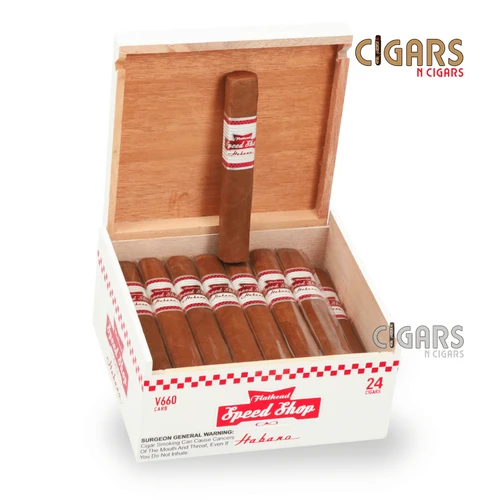
The core CAO Flathead blend and Flathead Speed Shop should also be treated separately. Current core Flathead cigars use Connecticut Broadleaf over a Connecticut Habano binder, while Flathead Speed Shop Habano uses an Ecuadorian Habano wrapper over a Mexican San Andrés binder with Dominican and Nicaraguan fillers.
The shared Flathead name and automotive theme therefore do not indicate an identical tobacco recipe. The wrapper and binder changes make Speed Shop a distinct blend within the broader Flathead family.
CAO Robusto, Toro and Large Ring-Gauge Cigars
CAO produces cigars across a particularly wide range of dimensions. Robusto and Toro formats provide conventional reference points, while Gordo and 60-ring cigars increase the proportion of binder and filler tobacco. Flathead extends the range further with box-pressed formats such as the 7 x 70 V770 Big Block.
When comparing sizes within the same CAO blend, dimensions can change the balance between wrapper and interior tobacco without changing the basic blend identity. When comparing different CAO families, tobacco composition should be considered first and vitola second.